
Role
SITEREA owns the product direction and implementation decisions shown in this case.
Mirelice
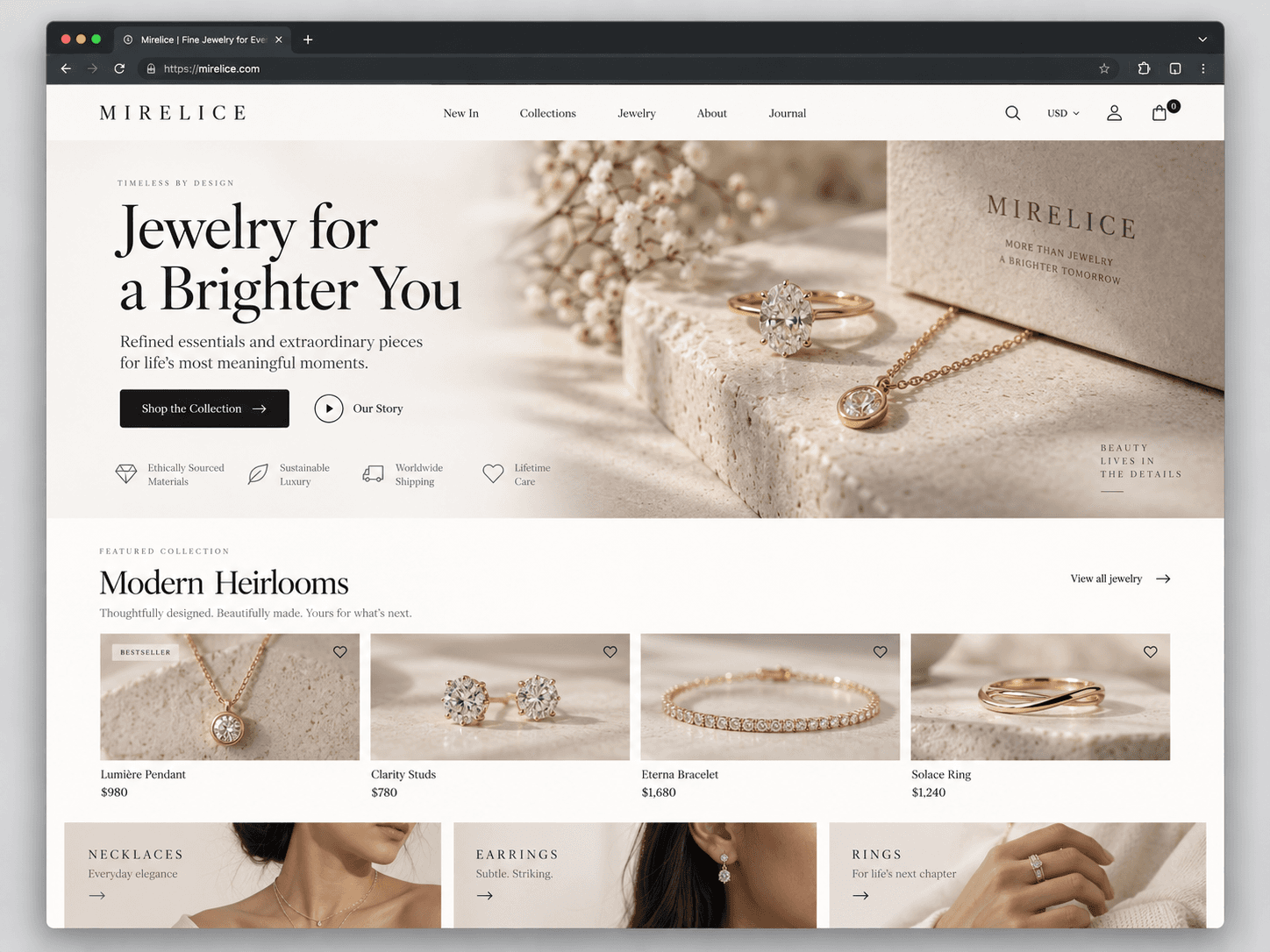
Mirelice is a SITEREA-owned premium storefront case. The useful part is not the visual style alone; it is the separation between localized presentation, market rules and server-authoritative transaction logic.
Commerce architecture
Case status
The page documents product architecture and implementation decisions from a SITEREA-owned commerce project; it does not claim a third-party client outcome.
Role
SITEREA owns the product direction and implementation decisions shown in this case.
Scope
Multilingual storefront architecture, market separation, server-side price authority and checkout handoff.
Evidence boundary
The case uses implemented system rules and interface structure as proof; unsupported revenue or conversion outcomes are not claimed.
Commercial authority
A localized interface should not become the source of commercial truth.
Commerce boundary
Mirelice keeps editorial localization independent from the rule that decides the commercial total.
Locale selects presentation and translated content.
Market or shipping context selects the commercial rule.
Checkout re-resolves the authoritative price on the server.
The order preserves the market context used for the transaction.
End-to-end scenario
The transaction should preserve language for presentation while resolving commercial rules independently.
Navigation, product content and editorial presentation follow the language setting.
Shipping destination or authoritative market context determines the commercial rule; language does not.
Checkout calculates the final price from server-side product and market rules rather than trusting the browser.
The transaction stores the applied market context and authoritative total for downstream handling.
Exception / boundary
If market context is unavailable, the system should fail safely to the defined default commercial rule rather than guess from locale.
What this proves
The same catalog can support multiple languages and markets without duplicating pricing logic in the frontend.
Case next step
Use the Mirelice case to compare your locale, market and checkout boundaries before adding more country-specific frontend logic.